


Description
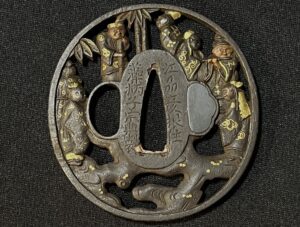
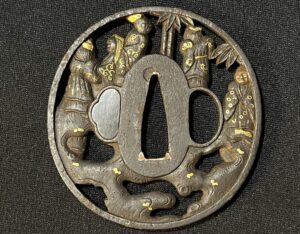
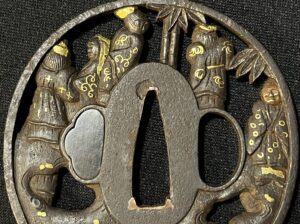
A fine signed antique Japanese sword tsuba available. This handsome Soten-style iron tsuba features what are likely priests. This antique tsuba would make a fine addition to any collection.
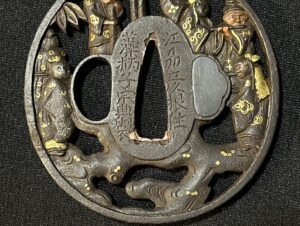
This tsuba is signed on one side Goshu Hikone-ju (Resident of Hikone in Goshu Province). The other side is signed Mogarashi Nyudo Soten (Made by Nyudo Mogarashi, Soten school).
Measurements 67 mm x 70 mm–so likely a wakizashi tsuba. The tsuba measures just over 4 mm thick.
A Sōten-style tsuba refers to a type of Japanese sword guard decorated with energetic battle scenes filled with samurai figures. Craftsmen of the Hikone Sōten school developed this style during the Edo period (17th–19th century). Over time, the distinctive design became widely copied, and many later pieces are described as “Sōten-style” rather than true works of the original masters.
Origin and Background
The style takes its name from Sōten, an influential artisan working in Hikone. Initially, craftsmen produced guards for samurai serving the Ii clan. Because these guards displayed dramatic and highly detailed scenes, they soon became popular among collectors and sword owners throughout Japan.
Visual Characteristics
Several features make Sōten-style tsuba easy to recognize.
Crowded Battle Scenes
First, the guard usually shows groups of armored samurai fighting, riding horses, or preparing for battle. These figures often fill nearly the entire surface, which creates a lively and dynamic composition.
High-Relief Carving
Next, artisans carved the figures in deep relief, allowing armor, weapons, and clothing to stand out clearly from the iron plate.
Gold and Silver Inlay
In addition, craftsmen frequently highlighted details with gold nunome-zōgan (textile-pattern inlay) and sometimes silver accents. As a result, helmets, armor edges, and weapons appear bright against the darker iron background.
Iron Plate Base
Most examples use a dark iron plate, which provides durability while also creating contrast with the metallic inlays.
True Sōten vs. Sōten-Style
Collectors generally distinguish between two categories:
True Sōten school works – early pieces made by masters of the Hikone school.
Sōten-style tsuba – later guards that imitate the design but were produced by other craftsmen.
While authentic early examples command very high prices, later Sōten-style pieces remain popular because they retain the dramatic visual appeal of the original design.
Collecting Appeal
Collectors value Sōten-style tsuba for several reasons:
Highly detailed craftsmanship
Dramatic samurai battle imagery
Rich use of gold inlay
Strong association with Edo-period sword culture
Because of these qualities, Sōten-style guards often stand out in collections of Japanese sword fittings (tosogu).
CONDITION:
This antique japanese sword tsuba is in excellent condition.
Have a collection of Japanese swords, tsuba, fittings, armor, etc. to sell? Click here to get started. https://stcroixblades.com/contact-us/


